Tree Streets is part of Johnson City. For property tax, schools and the town as a whole, read the Johnson City town guide.
Reviewed by the TriCitiesLivingGuide editor · Last reviewed November 15, 2026 · Report a correction
The short version
Tree Streets might suit you if
- you want an older house with a porch on a tree-lined street.
- you want a city elementary school inside the neighborhood.
- you are fine with design review before an addition or new garage.
ACROSS ALL OF JOHNSON CITY
- Census median home valueOwner-occupied homes, 2020 to 2024 ACS 5-year
- $268,200Census estimate, 2020 to 2024 · give or take about $12,691
- Annual property tax on a $300k homeJohnson City, Washington County portion
- $2,532
- Average commute
- 19 minCensus estimate, 2020 to 2024 · give or take about 0.8
These are town-wide figures. Census figures for one neighborhood are too uncertain to show.
From TriCitiesHQ
Be the business people meet while they decide where to live.
$299 a month All four sites
Get this spotWhat it's like to live here
The Tree Streets are part of Johnson City's larger South Side neighborhood. The National Register of Historic Places lists the Tree Streets Historic District, roughly bounded by South Roan, West Chestnut, Franklin and Virginia streets and University Parkway. Its nomination places it southwest of downtown, with houses mainly along West Maple, West Pine, West Locust and West Poplar streets, and notes that many streets are named for trees, among them Walnut, Maple, Locust, Pine, Holly and Laurel.
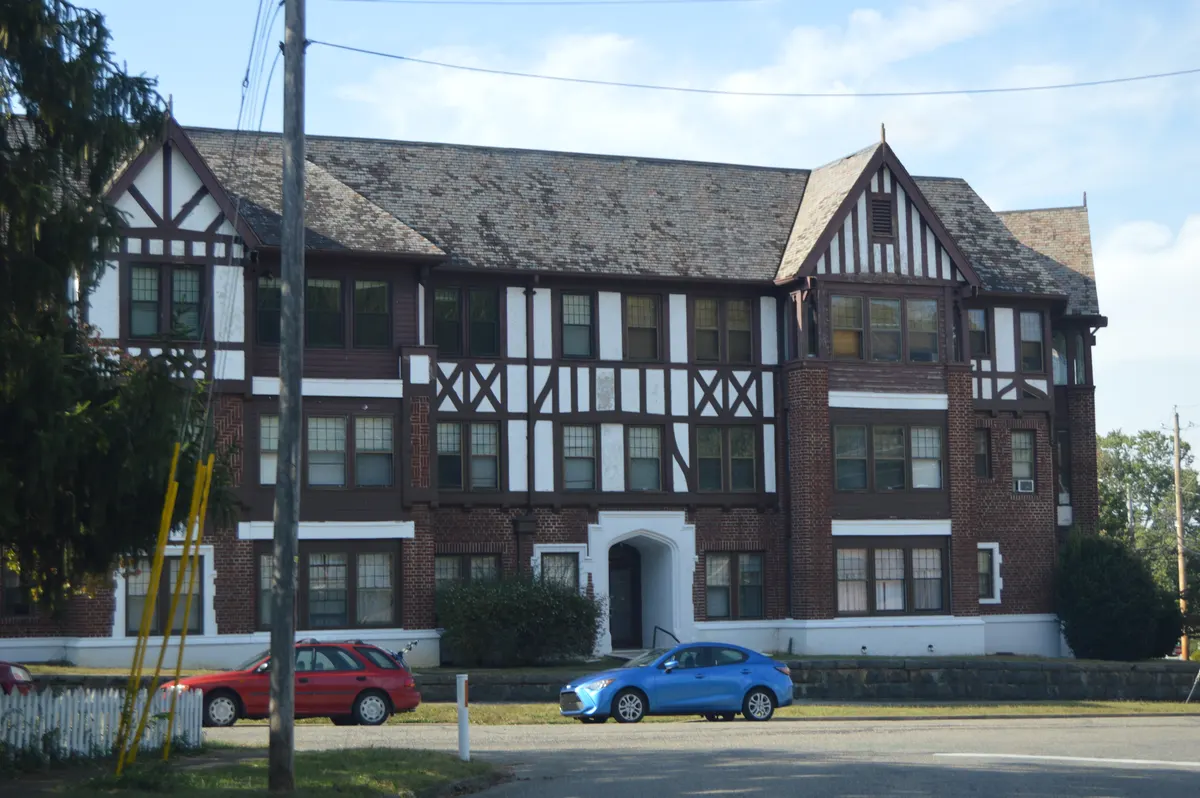
The neighborhood was laid out as Carter's Southwest Addition, platted on land that reached to what is now East Tennessee State University. The city's design guidelines describe mostly bungalows and four-squares, with Colonial Revival, Queen Anne and Tudor Revival houses mixed in, deep setbacks and small, well-shaded lots. The nomination says the ground ranges from flat to hilly.
South Side Elementary, a Johnson City school on Southwest Avenue, sits inside the conservation district. Homes inside city limits are served by Johnson City Schools and pay city property tax on top of Washington County tax.
Things locals wish you knew
- The National Register district and the city's Tree Streets Historic Conservation District are different areas; check the zoning map for your address.
- Inside the conservation district, additions, new buildings, moved houses and demolitions need a Certificate of Appropriateness from the Historic Zoning Commission.
- Paint colors, interior work and routine repairs are not reviewed.
- The city's guidelines say garages go behind the house.
- Johnson City Transit buses do not run on Sundays.
Downsides, honestly
If a house is inside the conservation district, adding living space, building new or adding anything visible from the street needs approval from the Historic Zoning Commission before work starts, and no house can be torn down until the commission reviews it. That adds a step and can shape what you build. Lots are small, and some streets are hilly. The houses are mostly early twentieth century, so plan for an inspection that looks closely at older systems. Bus service stops on Sundays.
This December: Christmas lights in Johnson City on TriCitiesTonight's lights map.